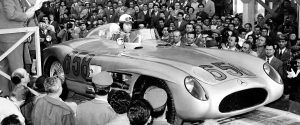
The Mille Miglia 2026 follows the historic Brescia–Rome–Brescia figure-eight route, one of the most beautiful classic car journeys in Europe. Over five days, from 9 to 13 June 2026, more than 400 original historic cars will travel through northern and central Italy, crossing mountain passes, medieval cities and some of the country’s finest driving roads.
For British visitors, understanding the route is the difference between simply seeing the Mille Miglia and experiencing it properly. The best spectator locations are not always the most famous ones, and the route changes every year. This guide explains each stage, the strongest viewing points, and how to plan a Mille Miglia trip from the UK.
The Mille Miglia 2026 route at a glance
The 2026 edition returns to the traditional figure-eight route, with the rally starting and finishing in Brescia and passing through Padua, Montecatini Terme, Rome and Rimini before returning north.
The five stages are:
- Tuesday 9 June: Brescia to Padua
- Wednesday 10 June: Padua to Montecatini Terme
- Thursday 11 June: Montecatini Terme to Rome
- Friday 12 June: Rome to Rimini
- Saturday 13 June: Rimini to Brescia
The complete route covers roughly 1,600 kilometres (1,000 miles), following the same broad course that made the original Mille Miglia legendary.
Stage 1: Brescia to Padua (Tuesday 9 June)
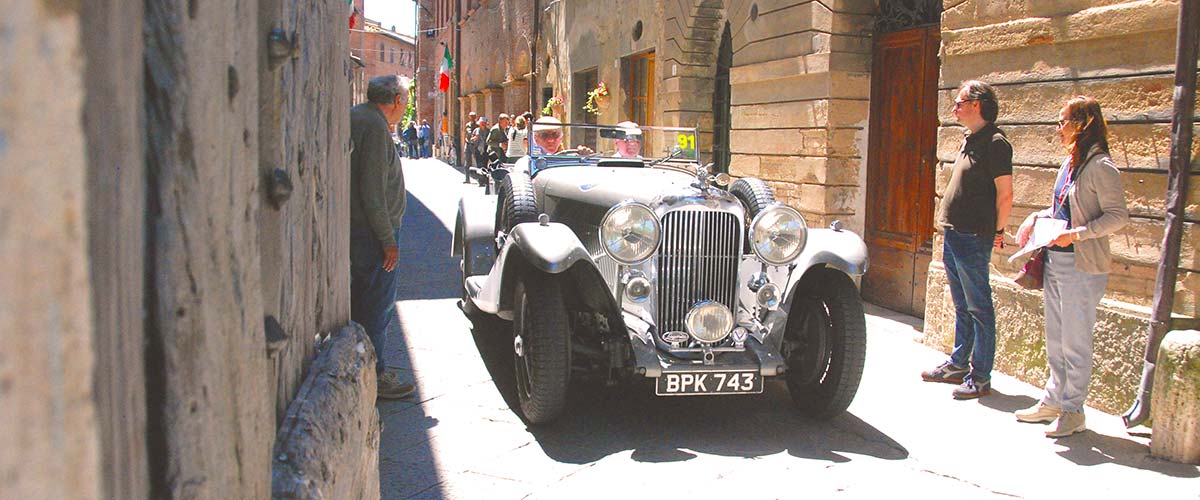
The rally begins at Viale Venezia in Brescia, where the first cars leave in the late morning. This is one of the most atmospheric moments of the entire week. The cars climb through Valle Trompia and Valle Sabbia, cross the Cavallo Pass, skirt Lake Garda, pass through Vicenza, and finish the evening in Padua.
Best viewing stops
Viale Venezia, Brescia — Best for the start atmosphere and close-up access to the cars.
Lake Garda — One of the most scenic sections of the rally, with lakeside roads and mountain backdrops.
Vicenza — Historic architecture and a more relaxed viewing experience than Brescia.
For UK visitors, Brescia and Lake Garda make an excellent first-day combination. The drive between them is easy, and the scenery is spectacular.
Stage 2: Padua to Montecatini Terme (Wednesday 10 June)
This is the Motor Valley stage, crossing northern Italy from east to west. The route passes through Ferrara, Modena, Reggio Emilia, and over the Abetone Pass before reaching Montecatini Terme.
Best viewing stops
Ferrara — The route passes through the historic centre and is one of the few places where the cars can often be seen on both the outward and return journeys of the figure-eight route.
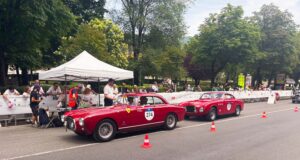
Modena lunch stop — Arguably one of the best spectator opportunities of the entire rally. The cars stop, drivers get out, and you can photograph the vehicles at close range.
Abetone Pass — Dramatic mountain roads and classic driving scenery.
If you’re interested in Ferrari, Lamborghini or Maserati, this is the stage to choose.
Stage 3: Montecatini Terme to Rome (Thursday 11 June)
This is the stage most British visitors remember.
The route passes through Tuscany, including the roads around Siena, before continuing south to Rome. The combination of historic cars and Tuscan scenery is what makes the Mille Miglia famous.
Best viewing stops
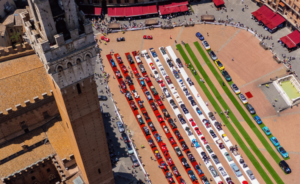
Siena — The cars pass through Piazza del Campo, creating one of the most iconic images of the entire rally.
Crete Senesi — Rolling hills, cypress trees and quiet roads ideal for photography.
Val d’Orcia — Beautiful landscapes and excellent viewing opportunities with smaller crowds.
If you only spend one day following the Mille Miglia, make it this one.
Stage 4: Rome to Rimini (Friday 12 June)
The return journey north passes through Umbria, including Assisi and Gubbio, before reaching the Adriatic coast and Rimini. This stage is often overlooked, which makes it one of the best for spectators who prefer fewer crowds and more authentic Italian towns.
Best viewing stops
Assisi — A beautiful historic setting with excellent viewing opportunities.
Gubbio — One of the hidden gems of the Mille Miglia route.
Furlo Gorge — Dramatic scenery and some of the most exciting roads on the return leg.
For photographers, Umbria is often more rewarding than the busier Tuscan stages.
Stage 5: Rimini to Brescia (Saturday 13 June)
The final stage heads north through Ferrara and Mantua before returning to Brescia. The finish at Viale Venezia is surprisingly emotional, with spectators lining the streets to welcome the cars back after five days on the road.
Best viewing stops
Ferrara — Excellent if you missed it earlier in the week.
Mantua — Historic centre and a more relaxed atmosphere.
Brescia finish — The most emotional moment of the entire event.
Many experienced spectators consider the finish more moving than the start.
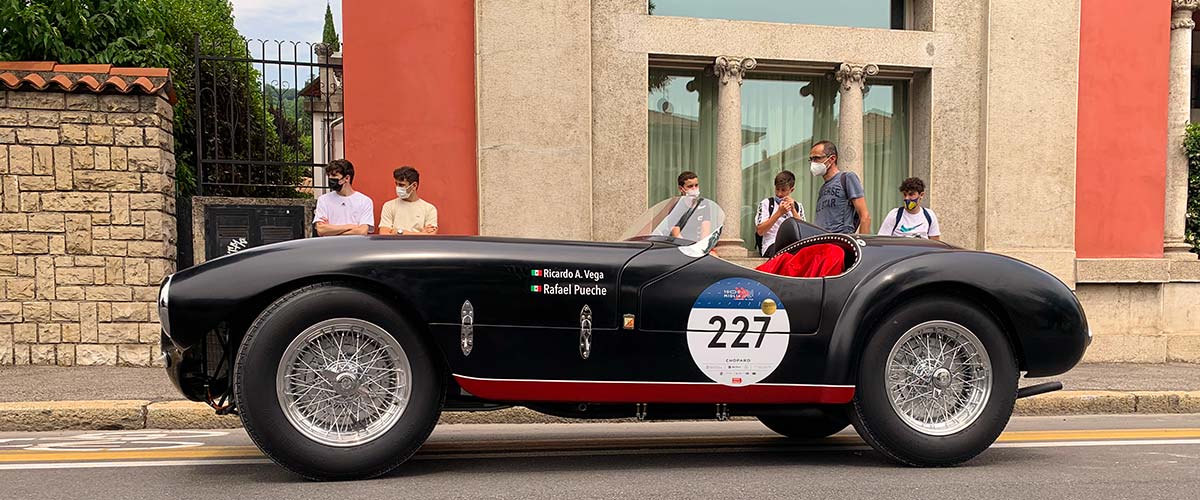
The best viewing strategy for UK travellers
The biggest mistake British visitors make is trying to follow every stage.
The Mille Miglia is not Formula 1. The roads are public, the timings can change, and travelling long distances every day can become exhausting.
A much better approach is to choose one region.
Option 1: Brescia & Lake Garda (2 days)
Best for first-time visitors.
Option 2: Tuscany (3 days)
Best for scenery and photography.
Option 3: Tuscany & Umbria (4–5 days)
Best for a complete Mille Miglia holiday.
This is also the approach used on Nostalgic’s Mille Miglia tours, where the routes, hotels and viewing stops are planned in advance.
Travelling from the UK
The easiest route is:
- Heathrow or Gatwick to Milan
- Train from Milan to Brescia (around 1 hour)
- Local transfer to your hotel
For the Tuscan stages, flying into Florence can be more convenient.
Book flights and accommodation at least six months in advance, particularly if you want to stay in Brescia, Siena or Montecatini Terme during the rally week.
Why the route matters
The Mille Miglia route is far more than a list of cities.
It is a journey through Italy’s automotive history, food culture, medieval towns and extraordinary landscapes. The figure-eight route is what makes the event unique. You are not watching a race from a grandstand; you are following a moving museum through the heart of Italy.
Experience the Mille Miglia with Nostalgic
If you want more than a roadside viewing experience, Nostalgic offers curated classic car tours that follow the most rewarding sections of the Mille Miglia route.
Drive a classic Alfa Romeo Spider or Mercedes-Benz SL, stay in carefully selected hotels, and experience the rally from the roads that made it legendary.
Frequently asked questions
What is the route of the Mille Miglia 2026?
The 2026 Mille Miglia follows the historic Brescia–Rome–Brescia figure-eight route, with overnight stops in Padua, Montecatini Terme, Rome and Rimini. The rally runs from 9 to 13 June 2026.
Where is the best place to watch the Mille Miglia?
For atmosphere, Brescia is unmatched. For scenery and photography, Siena and the Tuscan countryside are the strongest viewing locations.
Can I see the cars more than once?
Yes. The figure-eight route means locations such as Ferrara can offer viewing opportunities on multiple days, and careful planning can allow several sightings in a single stage.
How long do the cars stay in each town?
It depends on the stage. Lunch stops, particularly Modena, usually provide the best opportunity to see the cars at close range, while overnight stage finishes allow longer viewing in cities such as Padua, Montecatini Terme and Rome.